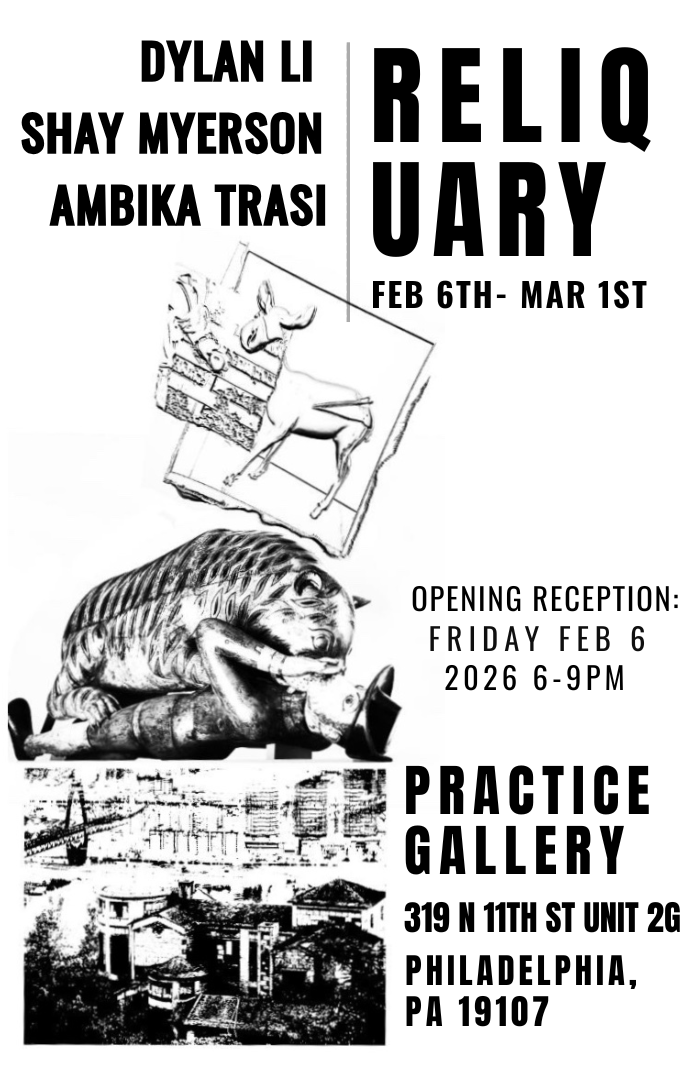
Reliquary: Presented by The Incubation Series
Reliquary
Presented by The Incubation Series
Works by Dylan Li, Shay Myerson, and Ambika Trasi
February 6th–March 1st, 2026
First Friday Opening Reception with the artists: Friday, February February 6, 6-9pm
Reliquary proposes to understand object and site through the accumulation of cultural memories. Oscillating between reproduction and reconfiguration, works by Dylan Li, Shay Myerson, and Ambika Trasi record abandoned architectural sites, rework physical sculpture through digital processes, and re-contextualize archival imagery. Through installation, sculpture, and video, the works in Reliquary participate in the construction of collective imaginaries, envisioned from the perspective of the subjects represented. The works in Reliquary occupy the space of haunting, between being and non-being.
How do individuals and communities reinterpret symbols, objects, and architectural spaces imposed by former oppressors? How does the freedom to self-define shape contemporary understanding? What does it mean to re-make or re-stage a highly symbolic object in a new context? Or to construct a speculative encounter? How might we depict a place or object from the perspective of the thing itself? Such questions animate Reliquary, and illuminate the essential role that art and cultural products play in shaping historical understanding and social patterns.
The exhibition presents the work of second-year UPenn MFA candidates and is co-organized by Laurel Brown, Sarabelle Vilfort, and Karla Ochoa. It is conceived as part of the Incubation Series—a student-led initiative that fosters new ways of making, exhibiting, and seeing art. This exhibition is made possible with the generous support of the Department of the History of Art at Bryn Mawr College, and The Sachs Program for Arts Innovation, the Department of the History of Art, School of Arts and Sciences, and the Department of Fine Arts, Weitzman School of Design at the University of Pennsylvania.
Artist’s Bios
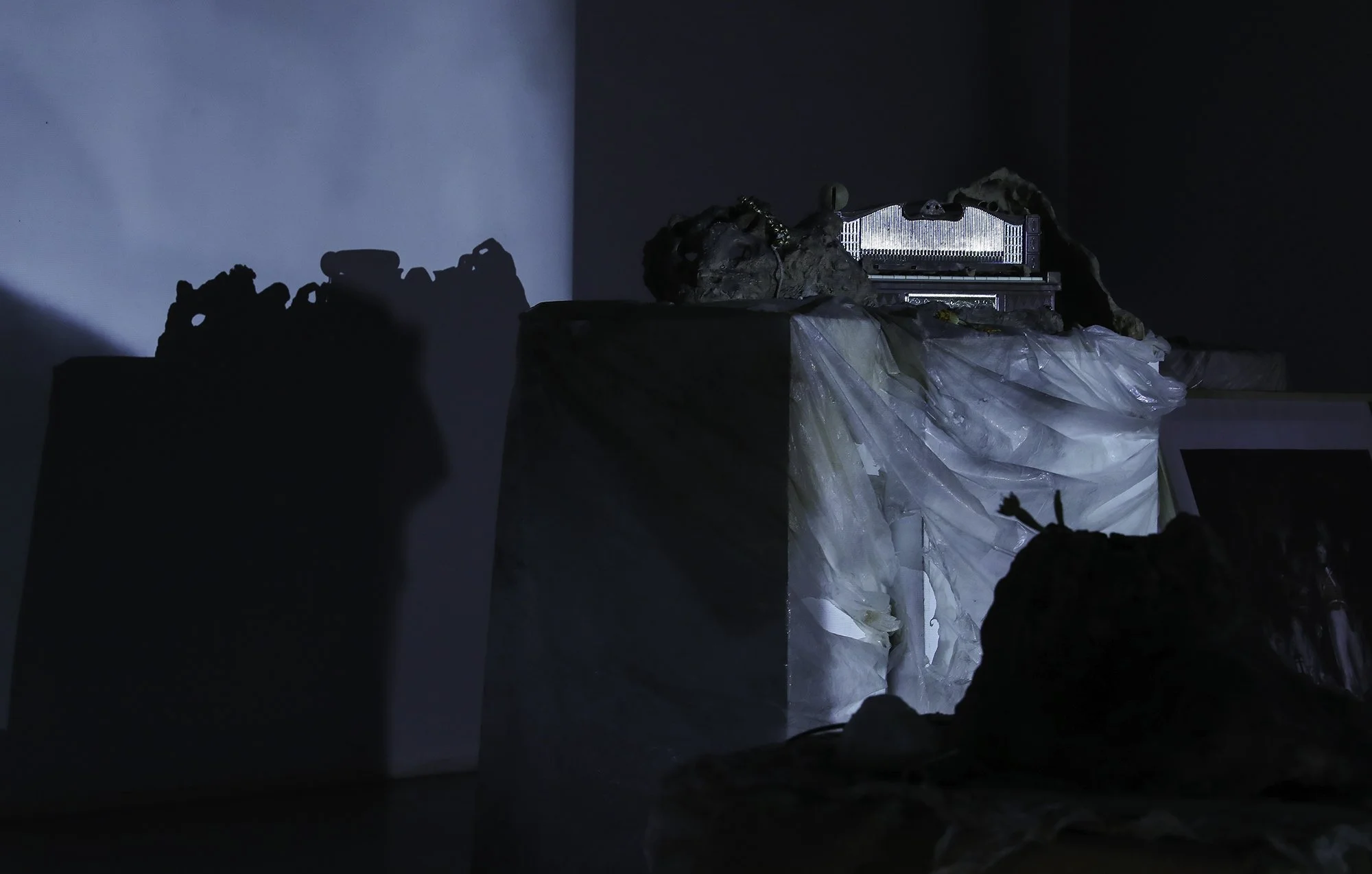
Ambika Trasi, Pillars of Salt: After Tipu's Tiger, 2025. Terracotta treated with sea salt, charcoal, sandalwood paste, loess, wood ash, baking soda, copper-vinegar solution, coffee grounds, glaze, dandelions, marigolds, and with glass; unknown metal; electric toy pipe organ; wood; plastic sheet; digital print on backlight media. Dimensions variable.
Ambika Trasi is an artist currently based in Philadelphia, PA. Her interdisciplinary research-based practice considers how coloniality and other systems of power are encoded into objects, sites, products, interpersonal relationships, and humanity’s extraction of natural resources. She is interested in how acts of trade and exchange can shift and destabilize power dynamics. She assembles installations out of her own sculptures, paintings, and collected detritus— personal, found, and archival materials, images, and footage— and uses sounding and performance as modes of intervention. Trasi received her B.F.A. from New York University in 2010 and is currently enrolled in the MFA program at the University of Pennsylvania.
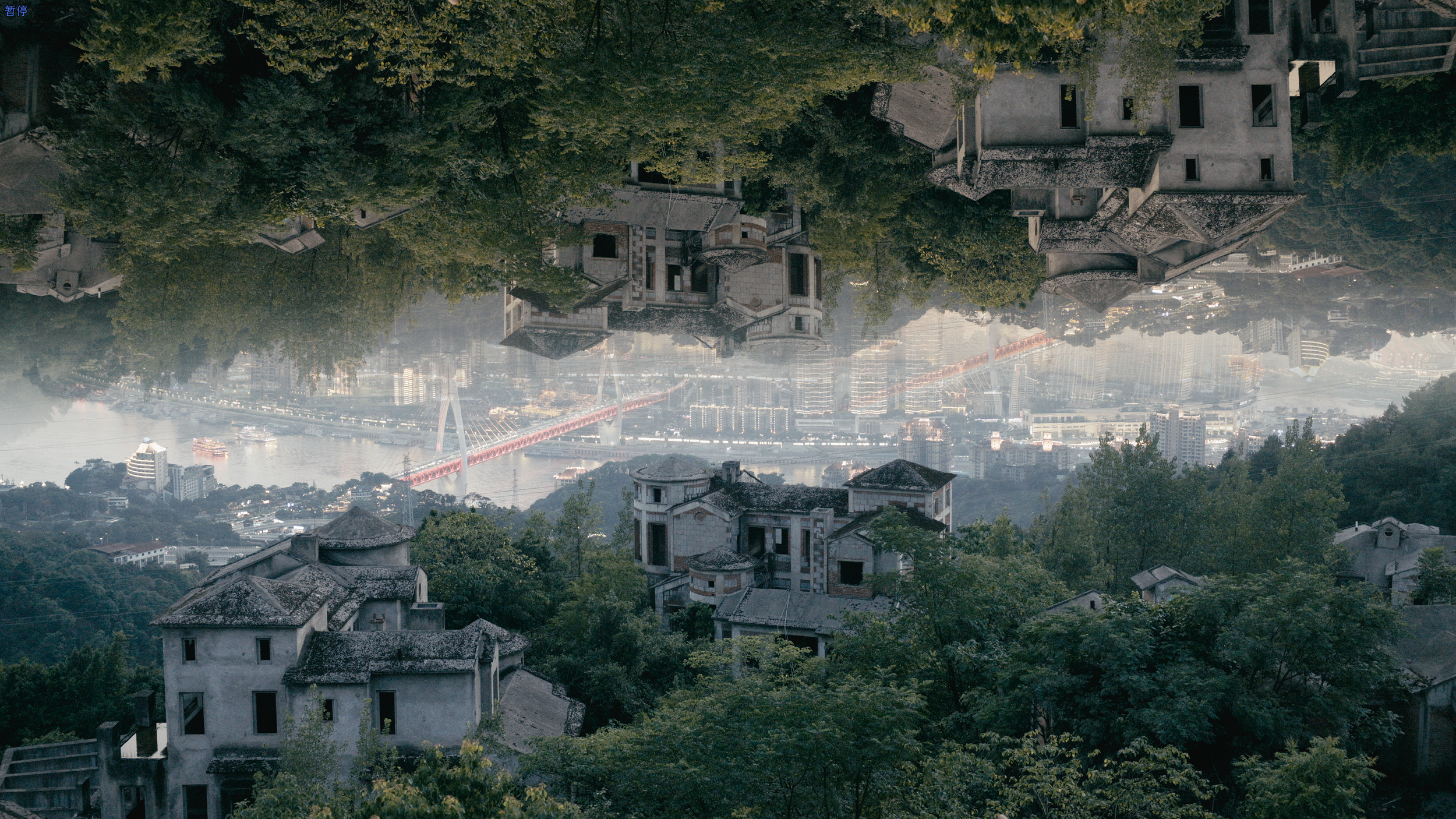
Dylan Li, Anonymous, 2025. Ultra HD single-channel video, 3:39 minutes.
Dylan Li works with photography, video, film, and installation. His practice examines how images translate bodies over time, focusing on how meaning shifts as images move across formats, materials, and temporal conditions. Rather than treating images as fixed representations, he approaches image-making as a process of transfer, where accumulation, fracture, and erasure reshape visibility and identity. Working across still and moving images, he is attentive to how changes in duration, scale, and sequencing redirect attention and reorganize the conditions of looking. He is currently an MFA candidate in Fine Arts at the University of Pennsylvania.
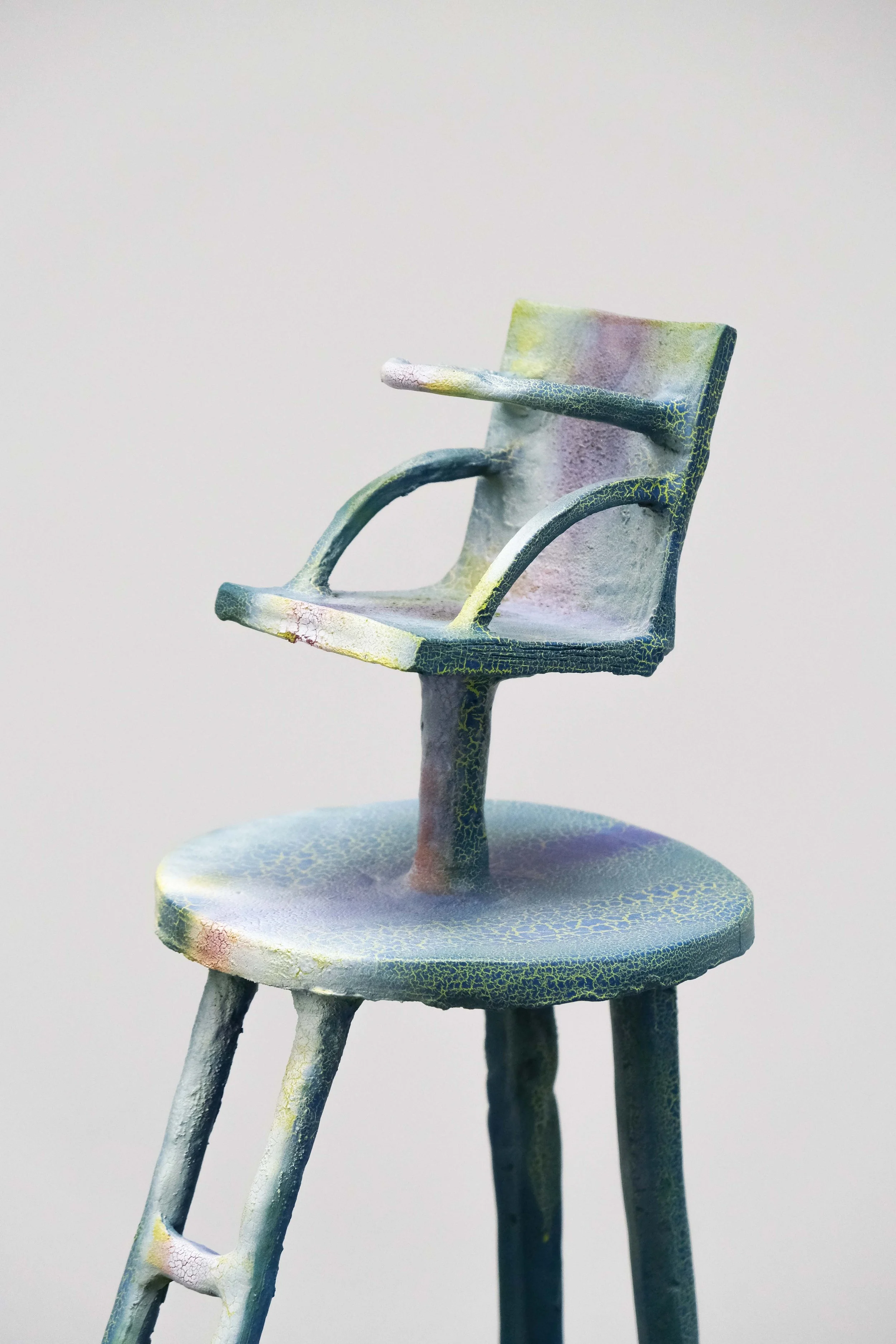
Shay Myerson, benchmaster, 2025. Ceramic, paint. 4 ft x 4 ft x 4 ft.
Shay Myerson is an artist based between Los Angeles and Philadelphia whose work spans sculpture, installation, and moving image. Engaging decoys, pseudo-events, and artifacts of internalized threat, she uses materials such as clay, metals, pigments, plastics, and social choreography to treat form as a diagnostic tool, one that examines how attention, belief, and belonging take shape. Rooted in ecological ritual and American myth, her practice is drawn to moments when objects become proxies for larger ontological confusions: when tenderness and suspicion intertwine, when the sacred tilts toward the absurd, and when infrastructures of care and infrastructures of fear become indistinguishable.